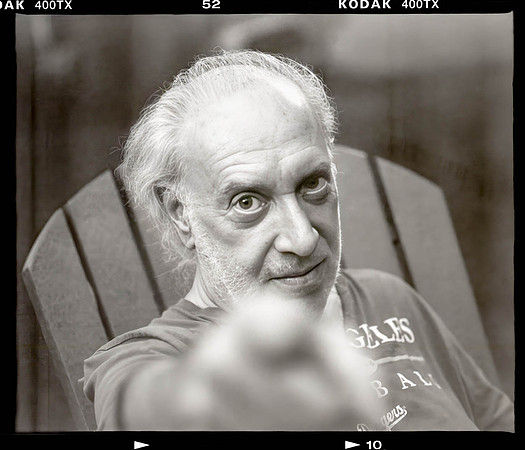
Neal Preston
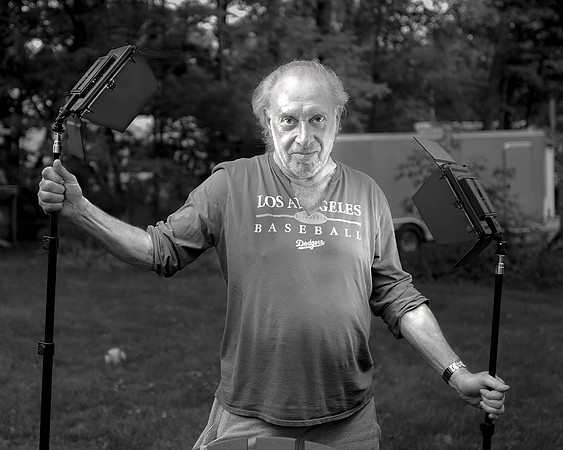

Photo by C. Hahn
“Access is the hard currency of my job. It is as essential a tool as any camera or lens. Once you have access, you must nurture it and treat it with the utmost respect or you can kiss it – along with your ass – goodbye,” according to Exhilarated and Exhausted by Reel Art Press.
Neal Preston is a person you don’t know that you know. Neal has been photographing musicians, rock stars, and visionaries for five decades. Originally from Forest Hills, New York, he began his lifelong passion in 1973 when he joined Led Zeppelin as their official tour photographer. With it, came the luxury of flying with the band on the Zeppelin starship (a reference to their private jet). Neal captured many candid images of one of the most popular bands of its era. “I was twenty-two at the time and didn’t quite know how far down the rabbit hole I was.” Neal said. He was the only photographer ever to have such an opportunity.
He later became close to Peter Townsend while photographing The Who. Neal also became friends with Brian May of Queen during a time when he shot one of the most iconic photographs - Freddie Mercury at Wembley Stadium in London in 1986. Neal spoke of his close friendship with Brian: “Brian May is the only rock star to step in my parents’ house.”
While photographing concerts, album covers, and gatefolds, he became best friends with writer and producer Cameron Crowe. Neals’ friendship with Cameron led to him shooting photographs on movie sets such as Crowes’ Almost Famous and Vanilla Sky.
Music is part of our development and discovery of who we are. Music is magic. Music can inspire and motivate you. It can make you move and make you dance. Music can make you laugh or make you cry. It can create that slice of time that shakes you and wakes something up inside that sometimes you can’t quite understand. Like some divine juncture music can shoot you back to the memory of a time or place – perhaps a special friend, dog, family member, or event.
The Beatles for instance; many people were so greatly affected the day the Beatles hit our television screens on The Ed Sullivan Show on February 9, 1964. It was that particular Sunday evening when, the debut of the Beatles had inspired millions of young people to pursue careers in various forms of music. “On that faithful night I sat down to watch the Beatles on Ed Sulivan I was almost 12 years old. Overnight I fell in love with rock music. This was all in addition to my new fascination with cameras and photography that was coursing through my bloodstream.” Neal said, according to Exhilarated and Exhausted, by Reel Art Press.
For Neal, that doorway opened wide and never closed. He wasn’t just watching history unfold – he was standing in the middle of it, camera in hand, as the soundtrack of a generation played out right in front of him. From smoky backstage rooms to massive festival stages, he captured the new pulse of rock and roll – the sweat, the chaos, the beauty. His photographs didn’t just document the music; they became part of its mythology.
Today, you can walk through a used vinyl record store and see that recognizable album cover of an old favorite. It’s not only the recognition of the album itself but also the memories and feelings that come with it. A book store can also bring back some of these fond memories. I remember walking past a magazine rack at a local book store and seeing the covers of Rolling Stone or Creem Magazine with photographs of my music heroes. At the time, little did I know that many of these photographs were taken by Neal Preston.
I first introduced myself to Neal through an email in April of 2025 in which I gave him an overview of my project. Subsequently, Neal agreed to talk with me on the phone. I was caught off-guard by our first call because that evening Neal was expecting two calls: one from me and one from a plumber. This lead to some initial confusion. Our first phone conversation is filled with humor and interesting anecdotes.
Phone conversation
April 11, 2025
CH - Hi Neal, it’s Charlie. How are you doing?
Neal - Hey, how’s it going? Finally, huh? I’m okay. We finally get to talk.
Do you go back and forth to Vermont a lot?
CH - Typically, New York City we do but not Vermont. According to your email you live in Las Vegas but have a summer home in Vermont?
Neal - Yeah, I’m a resident of Las Vegas, Nevada. I own a second home in Middlebury.
Do you get a lot of jobs there, or do you try to piggy back them?
CH - If I can, I try to piggy back them, but I will come to see you without any other commitments. Do you have a studio there?
Neal - No, just your typical two-story house, small bedrooms. Kind of a standard
country home. One of my partners is the world’s’ biggest Buffalo Bills fan.
That’s a conversation for another time.
CH - There you go: I have something in common with your friend.
Neal - I try to get to Vermont once every five to six weeks.
I was there three weeks ago, and at one time I put an ad in the front-page forum for a general handy man. I got a lot of responses within an hour. I put it off, and I said the first two people who write to me or calls me that sounds like he knows his stuff, I’ll use the guy. That’s how I ended up talking to you. I need general handy man work. I’m a special photographer. I’m one of the best photographers in the world. I bought a new toilet which needs to be replaced.
CH - So, you’re needing work on your home? Is that what you’re telling me?
Neal - Pardon?
CH - You’re needing work on your home?
Neal - Yeah
CH - Neal, I think you have me confused with somebody else. I wrote to you in
regards to shooting photographs and having you sit for me.
Neal - Wait a second.
CH - My email talks about a project I have which I photograph famous
photographers and interview them about their history of art and their pictures.
Neal - Oh, I’m so sorry. I apologize; the other dude’s name was the same as yours.
CH - That’s okay, and I hope you still want to talk to me because I surely
would like to get together with you.
Neal - I can do that, but you have to change my toilet.
CH - I don’t know if I can change it, but I can mess it up for you.
Neal - I do that every day. I totally apologize, so let’s talk about your project.
CH - I am asking popular, famous, and well-known photographers, as you are, to sit
and interview for me. A large part of my book will include each photographer’s
history. How they got to where they are and comparing each one and their
personal story.
Neal - What I would suggest you do is go to Amazon and get a
copy of my book that came out about five years ago. It’s selling for half price.
It’s called “Exhilarated and Exhausted”. It’s not the story of Jimmy Page drinking out of the Jack Daniels bottle, you know that picture, or Robert Plant holding the dove. It’s leading up to how I got that. It’s how you can get through it when there’s no instruction booklet. I started working with Led Zeppelin when I was about 22 and a half.
There’s no instruction book on how to get along with these people. How do you remain invisible? I was lucky enough to get Jimmy Page to sit down with me for an hour and a half about a year and a half ago. I was their only full-time photographer ever, and I asked him, ‘Did I get in the way? How did you deal with me? How did it feel I was there? Did it change anything?’ Because, I tried to be invisible, and the only way to be invisible was to be VISIBLE at all times. The best thing you can do is keep your eyes and ears open and your mouth fucking shut and do your job. Don’t get too high, especially when you’re shooting, and have a lab deadline. So many things go into doing what I have done, especially when most of the stuff I was doing was on tour, which was thirty-five years’ worth of stuff. That’s the kind of stuff that people find much more interesting than ‘I got to ride on a plane with the fucking base player of REO Speedwagon.’ My
ego is down on the floor. I’m not famous. I’m known to a certain little slice of the pop culture world of the rock ‘n roll pie. Yeah, I’ve done some stuff that is
not music. But I don’t expect someone at Macy’s saying, ‘There he is. There he is.’
Neal laughs. If they see the picture hanging on the wall of Robert holding the
dove, they know that picture, and that’s what gets me off. I appreciate that.
CH - I appreciate you talking to me about this.
Neal - I thought you were a plumber at first. You should get Ethan Russell. He’s the
top photographer of all time. He’s the only guy who has done album covers for
the Who, the Stones, and the Beatles. He was on the roof for the Beatles final concert. Need I say more? Ethan did the who cover where they’re all pissing on the monolith.
The other people with interesting stories besides me, it’s hard to say. Neil Leifer?
CH - You did some movie sets also haven’t you?
Neal - I did Almost Famous, Vanilla Sky, then I did a little Indie movie as a favor. It’s
called Laurel Canyon with Christian Bale and Kate Beckinsale, whom I
would marry in a New York second. Then I did Elisabeth Town. Those are the
Cameron Crowe movies I’ve done. There’s another coming out next year,
which I can’t tell you what it’s about.
CH - The last time we were in the city we happened to go to the Morrison Hotel Gallery in
Soho. I saw a photograph of Kate Hudson during the shooting of Almost Famous.
Did you shoot that photograph?
Neal – Yes. When did you see it? What we did was, it was the 20th anniversary of
Almost Famous. I took twenty frames and made two prints of each.
They were numbered one of-two and two-of-two. We hung those up along
with some stills I shot during the rehearsal of the Broadway version of
Almost Famous, which unfortunately opened and closed, in like, a day.
There was only a window of two or three days when you could have seen that
photo at the gallery.
CH - Yeah, I feel lucky that I came into the gallery at that time.
Neal - When do you want to do this and where? Anything is possible and I’ll do what I can.
We can come to Vermont or Las Vegas.
CH - Do you have a working studio in Las Vegas?
Neal – No. I haven’t had a studio in 40 years. I rent one if I need one.
It’s too much to maintain a studio because when it’s down you have to
fill it with someone else to rent it. At this point of my life, I’ve turned down a
lot of shoots, and I deal with the gallery. For Almost Famous, I’ve got a scan of
every frame I’ve shot. I must have shot fifty thousand frames, and I don’t
know how many hundreds of rolls of film. I’ve scanned every single one.
CH - What format did you shoot for Almost Famous?
Neal - Well, you’re basically shooting 35 mm 99% of the time. For portraits I have my Leica. The one that looks like a 35 mm Leica but is twice the size. That’s a medium format. Otherwise, I’m a Nikon guy. I’ve used Leicas early in my career. As far as my development to photographing musicians, it’s about figuring out how
you fit in. Throughout the hierarchy, you never act like the fifth Beatle. Never.
You’re not the sixth Rolling Stone. Because, if you act like that, they’ll pick up on
it and the next thing under your door will be a one-way ticket home. We all know those photographers with the egos and ‘Look at me. I’m on-stage.’ You know what? I don’t want people to know I was on-stage. Invariably, they’re going to see me. You always wear black. I don’t care about that shit.
CH - So, what you mean is, you let your pictures do your talking?
Neal – Well, yeah, you have to. Yeah, exactly. The thing about Vermont is,
I have never been interviewed up there. It’s beautiful. There’s a pizza place in a town
called Vergennes. It’s 15 minutes away from Middlebury called Rockers.
It’s a rock n roll pizza place. My friend John owns it, and the first time I went in,
there were rock photos all over the wall. I thought, newspaper photographer - I know the look. There was one great shot of Elvis Presley. I gave my card to the owner. I told him, I’m in the same business as the guy whose photos are on the walls. ‘I want to get a print of his Elvis photo, and tell him I’ll trade him whatever he wants. He’ll know my name, and if you can do that, it’ll be great.’ John goes to the back and three minutes later he comes back, ‘You don’t move, Neal. You sit right where you are.’ They googled me. It always happens. A year later, the newspaper shots are down and 25 of my shots are on the walls. The same shots that are on the gallery walls.
Charlie, we can meet up in three or four weeks from now. Maybe the end of June.
I get pretty busy and I may forget. So, just keep fucking bugging me. I don’t mind.
Two of my dogs are there. A mini aussie shepherd. My other dog is a blind husky.
We’re dog people and they’re like our children. At Rockers Pizza we did a raffle last year, and we gave all the money to two animal rescue places in Vermont. We gave $600 to $700 to the rescues.
Alright. Now, do you know of any handyman in Vermont?
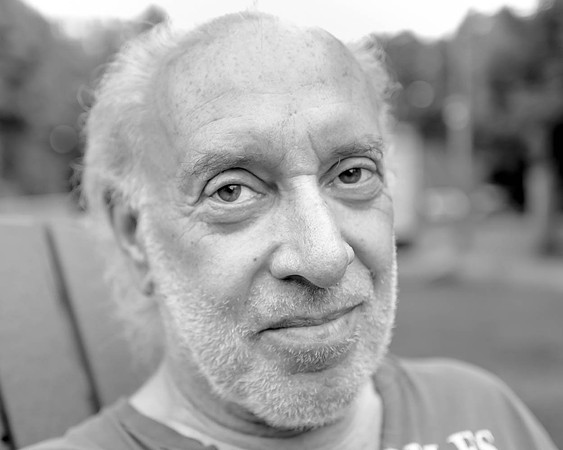
Neal Preston, photo by C. Hahn
Rockers Pizza
Vergennes, Vermont
June 21, 2025
My assistant Cheri and I drove into Vergennes, Vermont, a small town in a scenic and beautiful area of the state. We pulled up to Rockers Pizza on Main Street and entered. I walked through the doorway, into another room, and saw two men through a glass door leading outside to another part of Rockers. I recognized Neal and greeted him. “Hi Neal, I’m Charlie.” “I’m Neal and this is John, my friend and manager of Rockers.” Neal suggested we find a table to sit at while John excused himself and walked towards the back of the restaurant and entered the kitchen area.
Walking into the room, we picked out a table, and I gazed around to see many framed concert photographs on the walls. The walls were clean and off-white. There were roughly 22 photographs of all different sizes placed strategically on the walls. All were mounted with a white mat and a black frame. They included photos of Freddie Mercury and Queen, Led Zeppelin, Bruce Springsteen, Fleetwood Mac, the Sex Pistols, Sid Vicious, Sly Stone, and others. I recognized almost all of them from various magazines and newspaper articles, album and CD covers, and, of course, Neal’s book. It’s like the holy grail of rock, placed in this small and, humble pizza place in this town of Vergennes, Vermont. Photos of bands including; Freddie Mercury and Queen, Led Zeppelin, Bruce Springsteen, Fleetwood Mac, The Sex Pistols, Sid Viscous, Sly Stone and more.
“How was the drive up?” Neal asks. “It was nice. About a seven-hour drive, and it’s very beautiful here in Vermont. How did you ever find Middlebury?" I asked. “There’s only a million people that live in Vermont,” Neal said. “Middlebury is a college town; how did I find Vergennes is more of the question. A dear friend of mine Laurie moved from LA to go to college here in Middlebury. That, along with the fact I wanted to buy a place in New England my whole life. When the day comes and I retire or semi-retire or whatever, I want to be up in New England, with dogs and ‘leave me alone’.” Neal goes on, “From here, in Middlebury, it’s just a little less than an hour from Burlington where the airport is. Then from Burlington, it’s like 45 minutes to the Canadian border. You know what? It’s almost off the grid here. Yeah, it’s very insulated.”
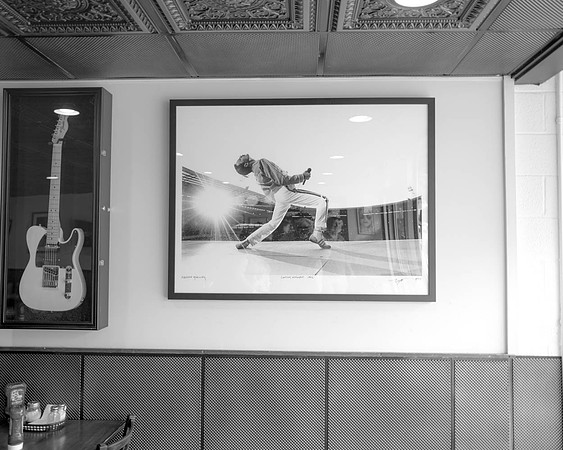
Neal’s Freddie Mercury of Queen at Wembley Stadium, hanging at Rockers
“That picture of Freddie (Neal said pointing to a large photo of Freddie Mercury hanging on the wall at Rockers), I remember we had one hanging at the Hard Rock. I’ll never forget one day this Japanese couple was there. The husband must have been ninety or something, and his wife had to be in her eighties. She wanted to get a picture of the husband in front of the photo of Freddie bending backwards on stage while performing during a show. He had to bend back like Freddie.” We all laugh at the image created in our minds. “For that older fellow to do that, said everything. The bottom line is - it’s the photos that matter. It’s the photos that mean something to people and the photos that will be remembered, not me, and I’m fine with that. I don’t care if you remember my name or not, but you know the photo. I could just about pull a kid out of any stadium seat and ask, ‘Do you remember this photograph of Jimmy Page drinking the Jack Daniels? That’s mine.’”
“I had a wall at the Hard Rock Hotel in Las Vegas, probably that long (Neal points to the wall across from our table). My name was on the wall in big letters. My prints were all up on the wall and they looked different than any other photos in the hotel. I know they did. I would listen to what people said about the photos. I would watch this one (person) and that one. Listening to them was how I would get my cookies (get excited about my work). I never said, I was THE photographer. I would care less about that. The pictures were famous and not me. I’m well known to a tiny circle or slice of pop culture. I really discovered what they mean to people.”
“So, tell me about your project?” Neal asked. “It has kind of bloomed.” I said. “One goal I set out to do is ask the same basic questions or a common denominator of each photographer.” I related to Neal, an experience we had with well-known Life Magazine photographer, Harry Benson. “Harry and his wife Gigi Benson were very gracious and super nice. That is where I shot probably one of my favorite photographs ever. It was of Harry on a couch in his living room holding his dog. It was just a perfect shot of him unposed, loving on his dog. You can see the feeling in his face.
Harry spoke to us about his Beatles photograph of the pillow fight. He said, ‘In those days the strobes were a lot stronger. So, I shot that photo at 125 at F8 and he shot two rolls of film with his Rolleiflex.’ It was fascinating to hear Harry telling me himself how he shot a particular photograph. It kind of blew me away to hear it.” Cheri adds, “What was interesting about Harry was that when it came to one of his photographs, he could tell you how he shot it, when he shot it, and what he shot it with.” I added, “Harry relived for us what transpired when RFK was shot. Told us in detail what had happened.”
Neal agrees, “It’s amazing because none of us are getting any younger. Knock on wood, my memory is fine. I can remember almost every single photo shoot I’ve ever done, and it’s in the thousands. To a certain extent I could probably tell you what the lighting set up was. I couldn’t tell you what the F-stop was. I could tell you what tools I used and what cameras. It’s part of my muscle memory.”
What Makes a Great Concert Photographer
“Can you talk about the difference between a great concert photographer and an average one?”
“Sure. The main goal is to try to tell the story of the gig in one frame. Tell the story of that show, in one photograph. The other thing is you want to be able to take the viewer - wherever they are - and put them on that stage. Make them feel they’re actually in the wings watching that show. That’s what a great concert photographer does. Anybody can take a picture of someone at the microphone, blah, blah, blah. Or, you could slap a flash on a camera. Although, I would never use a flash on a camera. You use what the lighting director gives you. I love to shoot things that are a little left of center, silhouettes, shapes, and use the light that I’m given to make a good photo.”
“There’s a career group of (touring) photographers that are really good, but then there is a group of sub-level or B-level photographers that want to be A-level, but they’ll never be. A lot of people read magazines, find the photo credits, and when your name is repeatedly seen, you become somewhat well-known. But it doesn’t mean you’re at A-level. That goes for any genre of photography.”
“Shooting live music is something few photographers do really well. I just discovered one day I was good at this because it felt natural to me. You can’t teach it, you can’t learn it, you just do it. The recipe is as follows: one part photography, one part love of music, one part a love of theater lighting, one part hero worship, one part timing and 95 parts instinct,” according to Exhilarated and Exhausted by Reel Art Press.
At the Beginning
“My favorite photographers slash, influencers are David Bailey and Norman Parkinson, a famous fashion photographer. The one who I consider the greatest music photographer of all time, not Jim Marshall, but Ethan Russell. Ethan was on the roof with the Beatles. The Beatles famous rooftop concert was their final live performance together. It was held on January 30, 1969. He was on stage with the Stones when the guy got stabbed. He did the famous Who cover when they were pissing on the monolith. Plus, he did the 30-page cover book for Quadrophenia. That was the single greatest project. I wrote the intros to his book, because he read my book and told me, ‘Now I get you. Will you write my Intro?’ I’m a big fan of his, and when his name pops up on my phone I say, ‘Oh no it’s Ethan. What do I say?” Neal laughs. “Same, if Pete Townsend was walking over there, I would leave you guys in a nano-second.” “I wouldn’t blame you,” I said.
“I’m self-taught, and I’ve never taken any classes. My first camera was an Ansco speed-X 4.5. That was my first camera, and that’s what got me into photography. That’s when I realized I love photography. I was about 12 or 13 maybe when I got that camera. My first brother-in-law gave it to me. It was the only good thing about my sister’s first marriage. As I progressed, I had, at one point or another, every camera ever made. I had a Minolta and a Miranda. I had an Exacta, which the controls were on the left side. You name it, and I had it. Then, somehow, I got into Nikon. The first really good camera I had was the Leica M3. I had two lenses for it; the long lens was a 135 at 4.5. I would have killed for an extra stop. I used to shoot with it at the Fillmore East.”
“When you first started, how did the adjustment go, and how did you accommodate your film speed? Did you push your film or did you develop it differently?”
“I realized I should start to push the film. I don’t think I ever shot tri-X at (ASA) 400; I was always pushing the stops.” (When a photographer pushes his film, it means he intentionally underexposes the film during shooting and then compensates for that by extending the development time in the lab.)
“I did darkroom work for a while. Although, the last time I was in the darkroom was 1977. It was an emergency. Peter Grant (Led Zeppelins’ manager) spanked me for something I did. I had to do something for him so, I wasn’t fired. But, before that, the last time I was in the darkroom was 1975. My partner and I, Andy Kent (who, was well known for his David Bowie photos), learned to develop not only black and white but transparencies. I’m too type-A for darkroom work. When you’re doing color, you know you have to be plus or minus a half a degree, temperature wise. So, I don’t have the personality for darkroom work. I know what I want in a print and, I can tell a good printer what I want in a print. In those days we had agencies all over the world.
First Break
“When was your first break?”
“Me and two of my buddies in Queens growing up were all into photography. They used to have a series of concerts at the New York State Pavillion at the World’s Fair. The concerts moved to the Singer Bowl which became the Louie Armstrong Tennis Stadium. We’ve taken some pictures from our seats, and we thought these are pretty good. There was a ticket office for the concert series two blocks from our house. Maybe we could cop some free tickets, we thought. It turned out to be the promoter’s office instead.
“We first met Gary Kurfirst who managed Leslie West and Mountain. Leslie went to my high school. He was Leslie Weinstein then. I used to buy hash from his brother.” We all laugh. “Gary Kurfirst’s partner was Shelly Finkel. Finkel became a big boxing promoter and Mike Tyson’s manager later in life.”
“The first big show that I photographed was Jimi Hendrix in Boston in 1968. I asked Gary, ‘Where should I stand?’ He said Jimi’s tour manager is a guy named Jerry Stickles, and he’ll tell you. So, I need to find Jerry Stickles who is the ultimate English, handlebar, bad looking guy. He just looked like bad news. I said to him, ‘Mr. Stickles, I’m a friend of Gary and Shelly’s. Where can I stand to shoot Jimi? He looked at me and he said, ‘I’ve been known to fucking punch photographers in the fucking mouth.’ Not hello or anything, and he told me where to stand. Interestingly enough, about ten or eleven years later, I got hired to work with Queen. The girl at the record label in LA said, ‘Go to New Haven and meet up with their tour manager Jerry Stickles.’ I thought, “Oh no!’ I was petrified of him for ten years because he was big. You know, he was one of those guys who would get drunk and beat the crap out of you. He couldn’t have been nicer (this time). He became a very close friend of mine.
“Did you ever remind him?” I asked. “Oh. He loved telling that story.”
The Change from Film to the Digital Format
“People always ask me how did digital change the industry? I always say the same thing: it changed the way you delivered photos to clients. That is what changed the industry. If you shoot on film now, you have to digitize it so you can deliver it. That’s the big change, the method of delivery.
The first people to champion digital photography were sports photographers. Sports Illustrated was the first magazine to go all digital. I had a Time-Life contract for 20 years. All the photographers at Time-Life had to ship the stories and the film to New York. The film would get souped up at the Time-Life lab in New York. When digital came about, the photographers would download everything onto a hard drive and then send the hard drive to New York. That saved a bit of time.
Eventually, they realized if everyone shot digital because of the time, it would be safe, they could get another day and a half worth of sports material for Sports Illustrated before it went to press. Therefore, not only could they get the Sunday night NFL games, but they could also get the Monday night NFL games. That’s why they went all digital. A little-known fact.”
“I was 22 and all of a sudden, I was working for Led Zeppelin.
I mean, who would have thought?”
“I remember you saying (Led Zeppelin manager) Peter Grant had gotten very angry at you for coaxing Robert Plant to go to a party in Detroit, ahead of the band,” I said.
“That’s why I had to go to the darkroom. Peter was so Bonzoed out. Bonzo (Led Zeppelin drummer John Bonham) would go to a deep depression in those days. I had to go up to Peter’s room, and he said I want 6 – 11 x 14s of John Bonham slipped under his door by 12 noon tomorrow.
It was on a Saturday and I thought, ‘What am I going to do?’ But then I managed to get the art director of Creem magazine to help me. He gave the darkroom keys to someone who got them to me. I had to take a cab from Troy, Michigan to Birmingham, which I couldn’t afford. I hadn’t been in a darkroom in two years, and I managed to get the prints slid under Bonzo’s door at like two minutes to twelve. Peter was the boss, but really Jimmy (Page) was the boss. Led Zeppelin was Jimmy’s band and don’t let anyone tell you otherwise.”
“Led Zeppelin tours were always thick with tension so palpable you could cut it with a knife. We had a relatively small tour party, extremely cloistered, with a swagger second to none.” According to Exhilarated and Exhausted published by Reel Art Press.
It Never Hurts to Have the Words Led Zeppelin on Your Resume
“We filmed an interview for my documentary a couple of years ago with Jimmy (Page), which is still going to take a while to complete. First of all, it could not have happened if he and I were sober. But he was so effusive and said, ‘Your pictures became very important to the legacy of my band.’ Jimmy couldn’t have been more complimentary. I asked him, ‘Were you worried I would be getting in the way, or did I get in the way?’ He said, ‘No, no - you fit right in.’”
“Jimmy then told the story of when they filmed The Song Remains the Same. I guess there was one hand-held camera guy who kept fucking with Jimmy’s wah-wah pedal, and he almost got kicked in the mouth. You have to be careful.”
“You don’t take your boyfriend, girlfriend, dope dealer, sister, brother, friend, or dog on stage with you - ever. That stage - especially back of the amps - is the roadies’ domain. If you look at anything, trip on anything or touch anything, every roadie is watching you. You can be thrown off the stage - never to return. The roadies hold the keys to the kingdom, always. Take care of the road crew, and you’ll have more fun with the roadies than the band.”
“There are a lot of photographers that show up - and I’m not going to name names - but they’re like, ‘look at me, look at me, I’m on stage. Look at me, I’m cool.’ No, no - the way to be cool is to not let anyone see you on stage. Every so often, you might dart out, but the irony of the whole thing is you want to be invisible.”
“The way to be invisible is to be visible at all times, so no one thinks twice. The drum roadie comes in with the practice pads to the drummer, or someone brings Jimmy’s double-neck-guitar - no one bats an eye. They shouldn’t bat an eye when I walk in with a camera either. So, I’m on the crew. Acting like you’re the fifth member of Zeppelin, the fifth Beatle, or the 23rd Earth, Wind and Fire is a recipe for disaster. Someone will get pissed off - and it’s usually the whole band.”
“When the show was over, your job wasn’t done on the Zeppelin tour. We used to base out of one city, so we might play at the Madison Square Garden or the Nassau Coliseum. After the show ended, I would gather my film and get the use of the limo for one hour. We would have different labs in different cities. Richard Cole, our tour manager, would say, ‘Okay, you’ve got the limo. Don’t pick up any girls. Don’t go clubbing. Once the band gets to the hotel and chills, they might want to go out. I would always have the use of the limo, and I’d get the film to the lab via the night drop. It was all set up in advance. If we were in New York, I’d collect the film from the Garden, Nassau, or maybe Philly, and drop off the two days’ (or nights’) worth of film. Everything was rushed, and by twelve noon the next day, I’d have all the film delivered. I rarely slept and that’s a whole other story. Not all chemically induced, I mean - stressed.”
“Was there a routine during your day?”
“The usual rock tour stuff - you’re there to do your job. It didn’t matter how high you were or weren’t; you had to get the job done. Everyone thinks that being on a rock tour is one big drug – and – sex orgy but it’s everything but that. It’s deadline, deadline, deadline, travel.
The older I got, I realized it’s the stress of travel that will kill you. I’ve been traveling since I was a kid because my dad was a Broadway stage manager. He would do shows out of town and travel for a year at a time. So, I travel easily – I’ve been used to it since I was a baby. I still travel, but it’s all different now.
You have to be very mindful to get the job done, and you don’t say no to any band members. Also – and this is very important - when you’re on the road, don’t ever do any of the band members drugs, or any of the roadies’ drugs. Whatever’s in the vile, don’t finish it.”
Can you talk about how you got the Jimmy Page photo with the Jack Daniels?
“We were back stage in Indianapolis, sitting at a table before the band went on. Jimmy was to my left, and there was someone to my right. I would always make sure that I had a camera in my hand. I happened to have a Nikon with a 24mm lens on it sitting on my lap. You never knew what was going to happen or what the photo possibilities there might be. I happened to look over to Jimmy for a moment and saw he was bringing the bottle up to his mouth. I had a roll of black-and-white film in my camera, and at the moment when he raised the bottle high, I shot the photograph. I shot one frame and forgot about it. That frame became the poster child for a rock-and-roll band’s excesses in the ‘70s. It was essentially a grab shot - right place, right time.”
Almost Famous
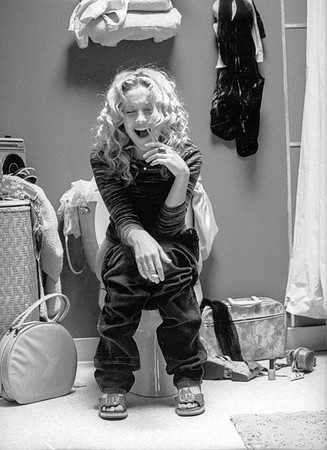
Neal’s photo of Kate Hudson as Penny Lane
“Last year, a fellow photographer and I went to the Morrison Hotel Gallery in New York. It was the Monday after you and Cameron had a weekend gallery show for the film, Almost Famous. They still had one of your photographs up on display - Kate Hudson as Penny Lane, sitting on a toilet,” I said.
“That photo is a great out-take.” Neal said. “Those were the first prints that sold, and I love that picture of Kate. There were only two prints made, and we had a good response to it. I shot photographs during the filming of Almost Famous - It felt like, a kind of rock tour, and it was fun.
While writing Almost Famous, Cameron included events that happened in 1973. I was there with him - he just didn’t write me in as a character at the time.
There was a girl – a groupie - in the movie who got traded for a case of beer during a card game. The real girl was a groupie from San Diego, where I used to hang out at. The card game really happened. I’m not going to go on with any details, but she left with another band’s roadies and showed up in Phoenix.”
“Almost Famous is one of my all-time favorite movies, and I’m a big fan of Cameron Crowe. There’s a seen in the movie showing the Continental Hyatt House in West Hollywood – better known as the ‘Riot house’. Was The Riot House really as wild as its reputation suggests?” I asked.
“Yeah, you would walk into the lobby of the Riott House, and it would be packed with kids, guests and fans. On certain floors, you’d walk down the hallway and see a door open with a party going on inside. It really was like that!”
The last night we shot at the Riott house was the final time the Continental Hyatt House sign was up. The next morning, they took it down, and it became The Andez West Hollywood Hotel.”
“How did you meet Cameron?”
“My girlfriend at the time was a publicist for rock bands. I had just moved out to LA. when she showed me a copy of the San Diego Door, which was their version of The Village Voice the popular downtown NYC entertainment newspaper. She said, ‘read this article. It’s written by a fourteen-and-a-half-year-old kid (Cameron).’ The article was good. Cameron came and met us in San Diego at a Humble Pie concert. He’s five years younger than I am, and he was really funny. We’ve been together ever since - through multiple marriages and everything else. Nancy Wilson (of the band Heart) was essentially my sister-in-law for twenty years.
“Cameron is releasing a book soon - his memoir, covering his life up to when he started being a film maker. It ends in 1981.
Neal has shown a penchant for having an eidetic memory and shares this small anecdote: “I Remember once Cameron called me in the middle of the night and asked, ‘Did Gregg Allman stay on the tenth floor of the Miyako Hotel (in Los Angeles) or the twelfth. Details, details. He knows I remember a lot of stuff. I gave him a whole slew of stuff for his book, and it’s going to be really good. I said,
‘Oh yeah,’ I said, Cameron is one of my favorites.” “I will let him know.” said Neal.